Free Next Day Delivery
on orders over £69 ex vat*

Expert Technical Team
Get advice on 01924 869 615

Same Day Dispatch
On orders placed up to 5.30pm

CBN Turning Inserts


ISO CBN Turning Inserts for Hard Turning & Cast Iron Machining

CBN Turning Inserts

Browse by Shape

CBN Turning InsertsCBN Turning Inserts
CBN Turning Inserts ENGINEERS CHOICE

Engineers Choice
CBN Turning Inserts

CC Style CBN InsertsCC Style CBN Inserts

CC Style
CBN Turning Inserts

CN Style CBN InsertsCN Style CBN Inserts

CN Style
CBN Turning Inserts

DC Style CBN InsertsDC Style CBN Inserts

DC Style
CBN Turning Inserts

DN Style CBN InsertsDN Style CBN Inserts

DN Style
CBN Turning Inserts

SC Style CBN InsertsSC Style CBN Inserts

SC Style
CBN Turning Inserts

SN Style CBN InsertsSN Style CBN Inserts

SN Style
CBN Turning Inserts

TC Style CBN InsertsTC Style CBN Inserts

TC Style
CBN Turning Inserts

TN Style CBN InsertsTN Style CBN Inserts

TN Style
CBN Turning Inserts

TP Style CBN InsertsTP Style CBN Inserts

TP Style
CBN Turning Inserts

VB Style CBN InsertsVB Style CBN Inserts

VB Style
CBN Turning Inserts

VC Style CBN InsertsVC Style CBN Inserts

VC Style
CBN Turning Inserts

VN Style CBN InsertsVN Style CBN Inserts

VN Style
CBN Turning Inserts

WN Style CBN InsertsWN Style CBN Inserts

WN Style
CBN Turning Inserts

Frequently Asked Questions

Still need help?

Can’t find the answer you’re looking for? Ask our team a question and we’ll point you in the right direction.

Ask a Question
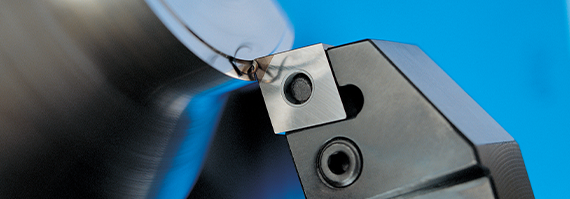
CBN (Cubic Boron Nitride) inserts are designed for precision machining of hardened steel, cast iron and other difficult-to-machine ferrous materials. They are commonly used for hard turning, finish machining and selected cast iron applications, enabling manufacturers to reduce cycle times and complete more operations in a single setup.
Typical applications include finish turning hardened steel, bearing steel, tool steel, chilled cast iron and powder metallurgy components where grinding replacement, process consolidation or improved productivity is required.
Cutwel offers a comprehensive range of ISO CBN turning inserts in CCMT/CCGT,
CNMG, DCMT/DCGT, DNMG, SCMT, SNMG, TCMT/TCGT, TNMG, TPGW, VBMT, VCMT, VNMG and WNMG styles, making it easy to select the optimum insert geometry for your workpiece, toolholder and machining application.
Whether you're selecting a single CBN tool for precision finishing or specifying tooling for high-volume production, CBN inserts help improve productivity, maintain consistent tolerances and extend tool life. If you are still unsure, send us your question and we will be happy to assist you.
Although both are superhard cutting tool materials, CBN (Cubic Boron Nitride) and PCD (Polycrystalline Diamond) inserts are designed for different machining applications. CBN inserts are the preferred choice for machining ferrous materials including hardened steel, bearing steel, tool steel, grey cast iron, chilled cast iron and hardened cast iron. They offer exceptional wear resistance and maintain their hardness at high cutting temperatures, making them ideal for hard turning and replacing grinding operations.
PCD inserts, on the other hand, are best suited to non-ferrous materials such as aluminium, copper, brass, composites, carbon fibre, graphite and reinforced plastics. While PCD provides outstanding tool life in abrasive non-ferrous applications, it is not suitable for machining steel because the diamond reacts chemically with iron at elevated temperatures, leading to rapid tool wear.
In summary, choose CBN inserts for hard turning ferrous materials and PCD inserts for achieving maximum productivity and surface finish when machining non-ferrous metals and composite materials. Selecting the correct insert material ensures optimum tool life, machining performance and component quality.
CBN turning inserts should be selected when machining hardened ferrous materials where tool life, dimensional accuracy and surface finish are critical. Compared to carbide inserts, CBN offers significantly greater wear resistance and retains its cutting performance at much higher temperatures, making it the preferred choice for hard turning applications. When comparing CBN inserts vs carbide, carbide is generally better suited to machining softer steel and general-purpose turning, while CBN excels in finishing hardened components and can often replace secondary grinding operations.
For CBN inserts vs ceramic, both can machine hard materials at high speeds, but CBN typically provides greater edge strength, more predictable tool life and improved dimensional consistency when machining hardened steel. Ceramic inserts are often preferred for high-speed machining of cast iron and heat-resistant superalloys, particularly in continuous cutting conditions.
Choosing between carbide, ceramic and CBN depends on the workpiece material, hardness and machining operation. For machining hardened steel and other hard ferrous materials, CBN is generally the most productive and reliable solution.
Using hard turning inserts manufactured from CBN is a proven alternative to grinding when machining hardened steel, enabling manufacturers to achieve tight tolerances and high-quality surface finishes. By replacing multiple grinding operations with a single turning process, manufacturers can reduce cycle times, minimise work handling and improve overall productivity.
CBN inserts are particularly effective for finishing components such as bearing races, gears, shafts, rollers and precision tooling, where consistent dimensional accuracy and excellent surface integrity are essential. They also enable complex features to be machined in one setup, helping to reduce setup times and improve process reliability.
Hard turning also enables multiple diameters, shoulders and profiles to be machined in a single setup, improving concentricity while reducing handling between operations.
While grinding remains the preferred choice for extremely tight tolerances or complex geometries, CBN inserts for hard turning are often the more cost-effective solution for many finishing applications, offering longer tool life, increased machining efficiency and lower production costs.
CBN grades are designed to balance wear resistance and toughness across different applications, including hard turning of hardened steel and machining abrasive cast iron. Grades with a higher CBN content generally provide excellent wear resistance and are best suited to continuous finishing cuts on hardened steel. Grades with a higher ceramic binder content sacrifice some wear resistance in favour of increased toughness, making them better suited to interrupted cuts or less rigid machining conditions.
When selecting a CBN grade, consider the workpiece material, hardness, machining operation and cutting conditions. Choosing the correct grade helps maximise tool life, maintain dimensional accuracy and achieve consistent machining performance.
Cutwel supply hardened steel CBN grades for high speed continuous or medium turning and low speed turning for unstable or heavy interrupted applications. Grades are also available for dedicated Cast Iron or Powder Metal turning. Ask the Cutwel team a question if you need help choosing.
Selecting the correct CBN insert geometry and ISO insert shape depends on the machining operation, workpiece geometry, accessibility and the level of edge strength required. The insert shape influences cutting forces, vibration resistance and insert durability, so choosing the correct ISO style is essential for achieving optimum tool life and surface finish.
ISO insert shapes are identified by their included angle, which determines the balance between edge strength and accessibility. C-shaped (80° diamond) and S-shaped (square) inserts offer excellent edge strength and are well suited to heavy-duty turning of hardened steel and cast iron, while round inserts provide maximum edge strength for demanding roughing operations. D-shaped (55° diamond) and V-shaped (35° diamond) inserts improve access to tight shoulders and complex profiles, making them the preferred choice for profiling and finishing. T-shaped (triangle) inserts are a versatile option for general-purpose turning and finishing, while W-shaped (trigon) inserts provide six cutting edges when used as double-sided inserts, making them a cost-effective choice for medium-duty applications.
For CBN inserts specifically, CN, SN and WN styles are commonly selected for robust machining of hardened steel and cast iron, as their stronger included angles provide excellent edge security and stable tool life in continuous or moderately interrupted cuts. DC, VC, VB and VN styles provide better access for profiling, finishing and machining close to shoulders, although they generally offer less edge strength than larger included-angle inserts. TC and TN inserts are versatile options for lighter turning and finishing, while CC inserts provide a useful balance between strength and accessibility.
Generally, select the strongest insert shape that provides sufficient access to the feature being machined - larger included angles improve edge strength and resistance to chipping, while smaller included angles improve accessibility for profiling and finishing operations. Insert geometry should also be selected alongside the appropriate nose radius, CBN grade and toolholder to balance edge strength, chip control, surface finish and accessibility, with a rigid machine setup equally important for achieving consistent hard turning performance.
Nose radius selection has a direct impact on surface finish, edge strength and productivity, so it should be considered alongside insert geometry and CBN grade. Cutwel supplies CBN turning inserts with 0.2mm, 0.4mm, 0.8mm and 1.2mm nose radii, covering the full range from precision finishing to heavy-duty roughing.
As a general principle, smaller nose radii (0.2mm and 0.4mm) generate lower cutting forces and produce a finer surface finish, making them well suited to precision finishing operations and components with tight surface finish requirements. Because the cutting load is concentrated over a shorter length of the edge, however, smaller radii offer less edge strength and are more prone to chipping under heavy or interrupted cuts.
Larger nose radii (0.8mm and 1.2mm) distribute cutting forces over a greater length of the cutting edge, improving edge strength and heat dissipation. This makes them the preferred choice for heavy-duty roughing, interrupted cuts and less rigid machine setups, though the trade-off is a coarser surface finish and higher radial cutting forces, which can increase the risk of vibration if the setup lacks sufficient rigidity.
As a rule, the nose radius should not exceed the depth of cut, as this increases the risk of chatter and poor surface finish. For finishing operations, selecting a nose radius smaller than the depth of cut helps optimise surface finish and minimise cutting forces, while for roughing operations a larger radius closer to the depth of cut improves edge security. The correct nose radius should be selected alongside the appropriate CBN grade, insert geometry and machine setup to achieve the best balance of tool life, surface finish and productivity.
Cutting conditions have a significant impact on the performance of CBN turning inserts. To maximise tool life and achieve a consistent surface finish, cutting speed, feed rate, depth of cut and machine stability should all be optimised for the workpiece material and insert grade.
CBN inserts perform best under stable cutting conditions with rigid workholding and minimal vibration. Excessive cutting speeds can accelerate flank wear, while feeds and depths of cut that are too light may encourage rubbing rather than efficient cutting. Following the manufacturer's recommended cutting parameters helps maximise tool life and process stability.
For hard turning and abrasive cast iron machining, using a consistent depth of cut and avoiding interruptions where possible will help maximise edge life. Selecting the appropriate CBN grade and insert geometry for the application is equally important, ensuring predictable tool life, excellent surface finish and stable machining performance.
In most hard turning and cast iron machining applications, CBN inserts are typically used dry. Dry machining maintains a consistent cutting temperature and helps prevent thermal shock, which can occur when coolant is applied intermittently to a hot cutting edge. It also simplifies the machining process by eliminating coolant costs and reducing cleaning and disposal requirements.
However, there are applications where coolant can be beneficial, particularly when using continuous, high-pressure coolant delivery to improve chip control or manage heat in specific machining operations. Flood coolant should generally be avoided unless continuous coolant delivery can be maintained throughout the cut.
The optimum approach depends on the workpiece material, machining operation, CBN grade and machine setup. Following the insert manufacturer's recommended cutting parameters will help maximise tool life, surface finish and machining performance.
Yes, CBN inserts can be used for both continuous and interrupted cuts, provided the correct CBN grade and insert geometry are selected. Continuous cutting generally delivers the longest tool life and highest surface quality, as the cutting edge is subjected to consistent cutting forces and temperatures.
Interrupted cuts place greater mechanical stress on the cutting edge as it repeatedly enters and exits the workpiece. For these applications, tougher CBN grades combined with stronger insert geometries, such as CN, SN or WN, are recommended to better withstand impact loading and minimise edge chipping. A rigid machine, secure workholding and stable cutting conditions are essential for reliable performance.
To maximise performance, the insert should be matched to the workpiece material, machine rigidity and cutting conditions. Selecting the appropriate CBN insert helps ensure reliable tool life, consistent surface finish and stable machining performance, whether machining hardened steel, cast iron or other hard ferrous materials.
Yes. Cutwel's technical sales engineers can help you select the most suitable CBN turning insert based on your workpiece material, hardness, machining operation and machine setup. Whether you're hard turning bearing steel, machining chilled cast iron, finishing tool steel or producing high-volume ferrous components, we can recommend the optimum CBN grade, ISO insert shape, nose radius and compatible toolholder to maximise tool life, productivity and surface finish.
Our range includes ISO-standard CBN inserts in CC, CN, DC, DN, SC, SN, TC, TN, TP, VB, VC, VN and WN styles from leading manufacturers, enabling us to recommend the most suitable insert for your material, machining operation and productivity objectives.
If you're developing a new hard turning process or looking to improve an existing one, our tooling specialists can recommend the most suitable insert based on your application, helping you increase productivity, improve tool life and reduce machining costs.
Whether you're selecting CBN cutting tools for a new machining process or replacing an existing CBN tool, our tooling specialists can recommend the optimum grade, insert geometry and cutting parameters for your application. Call us or share a question with the team.

Ask the Cutwel team a question

If you couldn’t find the answer in our FAQs, send us your question and we’ll get it to the right team.

Ask about product selection or technical advice
Get help with applications, materials or machining guidance
Help us improve our FAQs with real customer questions
Cutwel technical support team member on the phone

Browse All Drills