Free Next Day Delivery
on orders over £69 ex vat*

Expert Technical Team
Get advice on 01924 869 615

Same Day Dispatch
On orders placed up to 5.30pm

Boring Bars

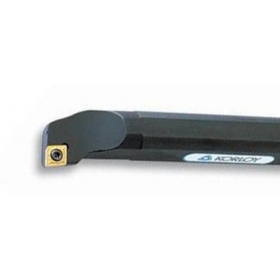
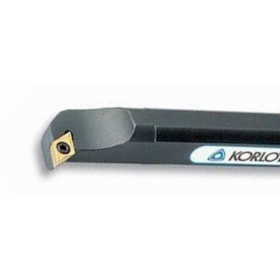
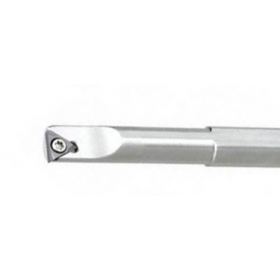
High performance internal turning tools for precision boring on lathes.

Milling Cutters
Best Sellers Boring BarsBest Sellers Boring Bars
Boring Bars ENGINEERS CHOICE

Engineers Choice
Boring Bars

Solid Steel Shank Boring BarsSolid Steel Shank Boring Bars

Steel Shank
Boring Bar

Through Coolant Steel Shank Boring BarsThrough Coolant Steel Shank Boring Bars

Steel Shank
Through Coolant Boring Bar

Solid Carbide Shank Boring BarsSolid Carbide Shank Boring Bars

Carbide Shank
Boring Bar

Through Coolant Carbide Shank Boring BarsThrough Coolant Carbide Shank Boring Bars

Carbide Shank
Through Coolant

Boring Bar SetsBoring Bar Sets

Boring Bar
Sets

Boring Bar SleevesBoring Bar Sleeves

Boring Bar
Sleeves

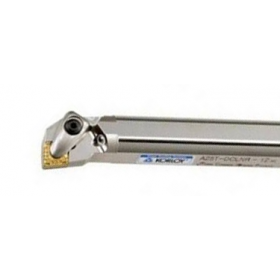
Anti-Vibration Modular Boring BarsAnti-Vibration Modular Boring Bars

Anti-Vibration
Boring Bar

Carbide Turning InsertsCarbide Turning Inserts

Carbide Turning
Inserts

Browse by Inserts

Boring Bars for CC Style InsertsBoring Bars for CC Style Inserts

CCMT / CCGT
Style Boring Bars

Boring Bars for CN Style InsertsBoring Bars for CN Style Inserts

CNMG
Style Boring Bars

Boring Bars for DC Style InsertsBoring Bars for DC Style Inserts

DCMT / DCGT
Style Boring Bars

Boring Bars for DN Style InsertsBoring Bars for DN Style Inserts

DNMG
Style Boring Bars

Boring Bars for SC Style InsertsBoring Bars for SC Style Inserts

SCMT / SCGT
Style Boring Bars

snmg Style Boring Barssnmg Style Boring Bars

SNMG
Style Boring Bars

SPMR Style Boring BarsSPMR Style Boring Bars

SPMR
Style Boring Bars

TBGT Style Boring BarsTBGT Style Boring Bars

TBGT
Style Boring Bars

TCMT / TCGT Style Boring BarsTCMT / TCGT Style Boring Bars

TCMT / TCGT
Style Boring Bars

TNMG Style Boring BarsTNMG Style Boring Bars

TNMG
Style Boring Bars

TPMT / TPMT Style Boring BarsTPMT / TPMT Style Boring Bars

TPMR / TPMT
Style Boring Bars

VBMT / VBGT Boring BarsVBMT / VBGT Boring Bars

VBMT / VBGT
Style Boring Bars

VCMT / VCGT Style Boring BarsVCMT / VCGT Style Boring Bars

VCMT / VCGT
Style Boring Bars

VNMG Style Boring BarsVNMG Style Boring Bars

VNMG
Style Boring Bars

WBGT Style Boring BarsWBGT Style Boring Bars

WBGT
Style Boring Bars

WCMT Style Boring BarsWCMT Style Boring Bars

WCMT
Style Boring Bars

WNMG Style Boring BarsWNMG Style Boring Bars

WNMG
Style Boring Bars

Frequently Asked Questions

Still need help?

Can’t find the answer you’re looking for? Ask our team a question and we’ll point you in the right direction.

Ask a Question
A boring bar is used for internal turning operations on a lathe to enlarge and finish pre-drilled or cast holes with high accuracy and improved surface finish. Unlike drilling, boring improves concentricity and dimensional control inside the workpiece.
Boring bars can machine a wide range of materials depending on the insert geometry and grade selected, including steel, stainless steel, cast iron, aluminium, brass and difficult alloys such as titanium and heat-resistant materials. Cutwel stocks steel shank and carbide shank options in both solid and through coolant type.
Boring bars are available in several designs to suit different applications. Solid carbide bars provide maximum rigidity for small bore diameters, while steel shank bars offer a cost-effective solution for general machining.
For long overhangs or deep internal boring, anti-vibration bars help reduce chatter and improve stability. Through coolant boring bars deliver coolant directly to the cutting edge to improve chip evacuation and tool life. The correct type depends on bore size, depth and machine stability.
Choosing the correct boring bar depends on bore diameter, depth, material and machine rigidity. As a general rule, select the largest bar diameter that will fit inside the bore to maximise rigidity and minimise vibration or chatter.
The insert shape and style should also be considered. Common insert geometries such as CCMT, DCMT, TCMT and VBMT provide different cutting angles, strengths and accessibility within the bore. Smaller insert shapes may allow access to tighter internal diameters or profiling features, while stronger geometries may be preferred for roughing.
Another important factor is the approach angle of the boring bar head, which determines how the insert engages with the material. Different holder styles provide varying approach angles that influence cutting forces, shoulder access and chip flow during machining.
For deeper bores or longer overhangs, anti-vibration boring bars can improve stability and reduce chatter. Insert geometry and grade should also be matched to the material being machined and whether the operation is roughing or finishing. Cutwel’s technical team can assist with selecting the most suitable tooling.
A boring bar is used for internal turning to enlarge and finish existing holes. A turning tool machines external diameters and profiles. A reamer slightly enlarges a drilled hole to a fixed size and removes minimal material.
Boring bars use indexable inserts such as CCMT, DCMT, TCMT and VBMT styles. The insert choice depends on bore size, cutting forces and profile requirements.
Selecting the correct insert geometry and grade improves tool life, chip control and surface finish. Cutwel offers grades suitable for steel, stainless steel, cast iron and other materials.
Boring bars are available with a range of angles, which describe the orientation of the cutting insert in relation to the workpiece during internal turning. Different holder styles are designed to suit specific insert shapes and machining applications.
Common boring bar angles include 90°, 93°, 95°, and 108° depending on the holder design and insert geometry. For example, boring bars designed for DCMT inserts commonly feature a 93° holder angle, while holders for CCMT inserts often use a 95° angle, providing strong cutting edge support for general internal turning operations.
Larger angles such as 107° or 117° are used on certain holder styles to provide improved access when machining internal shoulders or features where additional clearance is required.
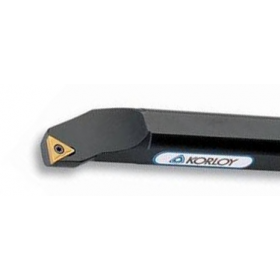
Manufacturers such as Korloy offer a wide range of boring bars with different insert styles and angles, allowing machinists to select the most suitable tool for their internal turning application. Always check the product specification to confirm the insert compatibility and holder angle.
Common issues include chatter, poor surface finish and premature insert wear. These are usually caused by excessive overhang, incorrect insert selection or unsuitable cutting parameters.
Tool life can be improved by minimising overhang, using the largest possible bar diameter, selecting the correct insert grade and optimising speeds and feeds. Anti-vibration bars are recommended for deeper bores or unstable setups.
Cutwel supplies high-performance ISO turning and boring solutions from leading brands, such as Korloy and Teknik, backed by UK stock availability and expert technical support.
Our range includes steel, carbide and anti-vibration boring bars, along with compatible inserts and grades, ensuring a complete solution for internal turning applications.
Yes. In addition to standard ISO boring bars, Cutwel can supply special or custom tooling for unique bore sizes, extended reach applications or specific insert configurations.
Our team can advise on suitable solutions or source custom tooling to meet your requirements.
Most standard boring bars and inserts are available from UK stock for fast dispatch. Delivery times depend on stock availability and order size.
For special or made-to-order tooling, lead times may vary. Contact the Cutwel team for accurate availability and delivery information.

Ask the Cutwel team a question

If you couldn’t find the answer in our FAQs, send us your question and we’ll get it to the right team.

Ask about product selection or technical advice
Get help with applications, materials or machining guidance
Help us improve our FAQs with real customer questions
Cutwel technical support team member on the phone